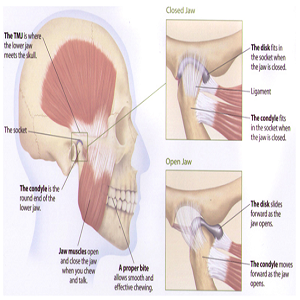
Diagnosis and Treatments of TMJThe temporomandibular joint (TMJ) acts like a sliding hinge, attaching your jaw to the skin above your scalp. Your jaw has two joints each on the side. When you have a TMJ disorder, yoThe temporomandibular joint (TMJ) acts like a sliding hinge, attaching your jaw to the skin above your scalp. Your jaw has two joints each on the side. When you have a TMJ disorder, you can feel the pain in your joints and in the muscles that control this jaw movement.
Determining the true cause of a person's TMJ disorder is often difficult. Your pain can be caused by a combination of factors such as heredity, arthritis or a jaw injury. Some people who have jaw pain also start grinding or grinding their teeth (bruxism), although many people habitually grind or grind their teeth and never have a TMJ disorder.
In most of the cases, the discomfort and the pain related to TMJ can be go away with a self-managed care. But most severe cases need TMJ treatment. Surgery is usually the last resort after a concussion has failed, but some people with TMJ disorder may benefit from surgical treatment.
Symptoms of TMJ
Signs and symptoms of TMJ disorder may include:
• Pain or tenderness in your jaw
• One or both temporary joint pain
• Pain in and around your ears
• Difficulty or pain in chewing
• Pain in the face
• Makes it difficult to lock the joint, open or close the mouth
When you open or chew your mouth, TMJ disorder can cause a clicking sound or arousal. But if there is no pain or movement limitation associated with clicking on your jaw, then you probably don’t need treatment.
When to see a dentist?
If you have constant pain or tenderness in your jaw, or if you cannot fully open or close your jaw, consider TMJ treatment. The temporomandibular joint combines hinge action with sliding motion. The parts of the bone that make contact in the joint are covered with cartilage and separated by small shock-absorbing discs, which usually facilitate movement.
TMJ Treatment
Without medication, the symptoms of TMJ disorder may go away in some cases. Your doctor may prescribe a range of TMJ treatment options in Melbourne if your symptoms continue, sometimes taking more than one treatment at a time.
Treatments involved Drugs
Along with other neuropathic therapies, these drug alternatives may help alleviate the pain associated with TMJ disorder:
1. Pain relief and anti-inflammatory. If over-the-counter pain medications are not enough for TMJ pain relief, your doctor or dentist may prescribe strong painkillers for a limited time, such as prescription strength ibuprofen.
2. Tricyclic antidepressants. These drugs, such as amitriptyline, are mostly used for depression, but in low doses, they are sometimes used for pain relief, bruise control, and sleep.
3. Muscle relaxation. Your dentist may prescribe you medications related to muscle relaxation, which can be continued for a weeks or days. This medication will relief the pain caused by the muscle and also helped to reduce the cramps happening due to TMJ disorder.
Non-drug treatments for TMJ disorder include:
1. Oral splints or mouth guards. Most likely, people suffering from jaw pain will benefit from wearing a soft or firm tool over the teeth, but the reasons why these devices are beneficial are not well understood.
2. Physical treatment. This kind of TMJ treatment includes ice pack, moisturizing, exercises to stretch the muscles. In most severe cases, the dentist may suggest for undergoing through an ultrasound for the jaw muscles.
3. Consultation. Education and counselling can help you understand the factors and behaviours that can increase your pain, which can help you avoid it. Examples include cutting or grinding teeth, bending over your chin or biting nails.
Surgical or other procedures
When other methods do not help, your doctor may recommend such a procedure:
• Arthrocentesis. Arthrocentesis is a minimally invasive procedure that involves inserting small needles into the joint to irrigate fluid through the joint to remove debris and inflammatory byproducts.
• Injection. In many cases, this kind of injections into the joint proves to be helpful in TMJ treatment Melbourne. In general, injection of botulinum toxin type A (Botox, others) into the jaw muscles used for chewing can relieve the pain associated with TMJ disorder.
• TMJ arthroscopy. In some cases, orthoscopic surgery can be as effective as open-joint surgery for various TMJ disorders. A small cannula is inserted into the joint space, then an arthroscope is inserted and small surgical instruments are used for surgery. TMJ arthroscopy has fewer risks and difficulties than open joint surgery, but it also has some limitations.
• Modified condylatomy. Improved condylatomy indirectly addresses TMJ through surgery, but not in the joint. It can be helpful to treat this pain and if L King is experienced.
• Open-joint surgery. If your jaw pain is not resolved by more complex therapy and appears to be due to a structural problem in the joint, your doctor or dentist may prescribe open-joint surgery which is designed to repair or replace the jaw joint. However, this kind of surgery includes more risks than other TMJ treatments in Melbourne. It should be considered very carefully after discussing the pros and cons with your dentist.
If your dentist recommends surgery or other procedures, be sure to discuss the potential benefits and risks, and ask what all your options are.
For more details contact to Holistic Dental Donvale.
|